Feature
The Shoulder Lane
Channel Nineteen, an Hour Before
An Amarillo four-piece plays truck stops on Interstate 40 from the back of a flatbed trailer. The audience stays in its cabs. Nobody claps. Everybody comes back.
The show begins an hour before it begins, on the radio. Somewhere east of Tucumcari or west of Elk City a voice comes up on channel nineteen, low and close, and gives a truck stop, an exit and a time. Drivers who have heard it before pass it along. Drivers who have not pull in to see what the fuss is about.
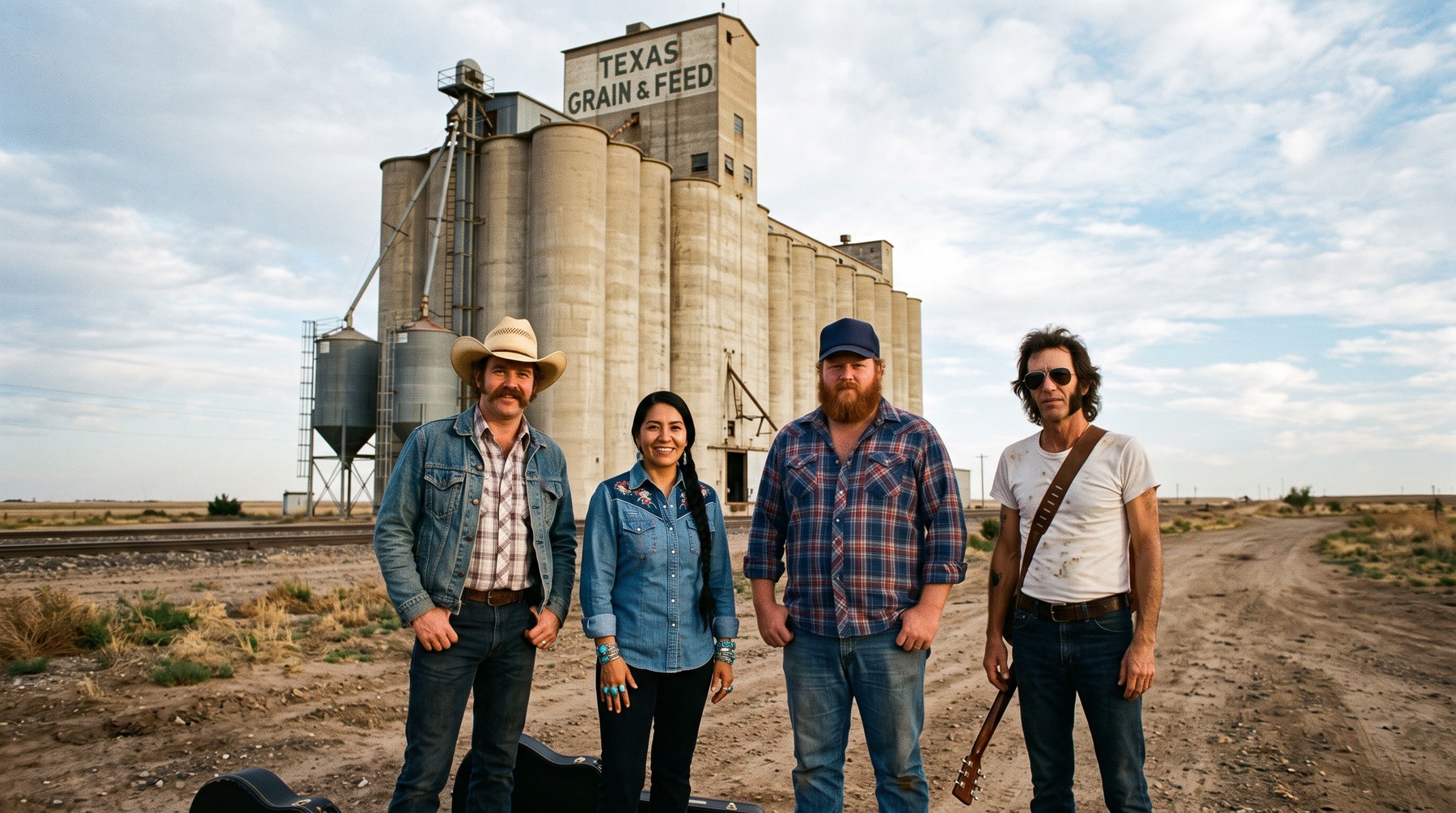
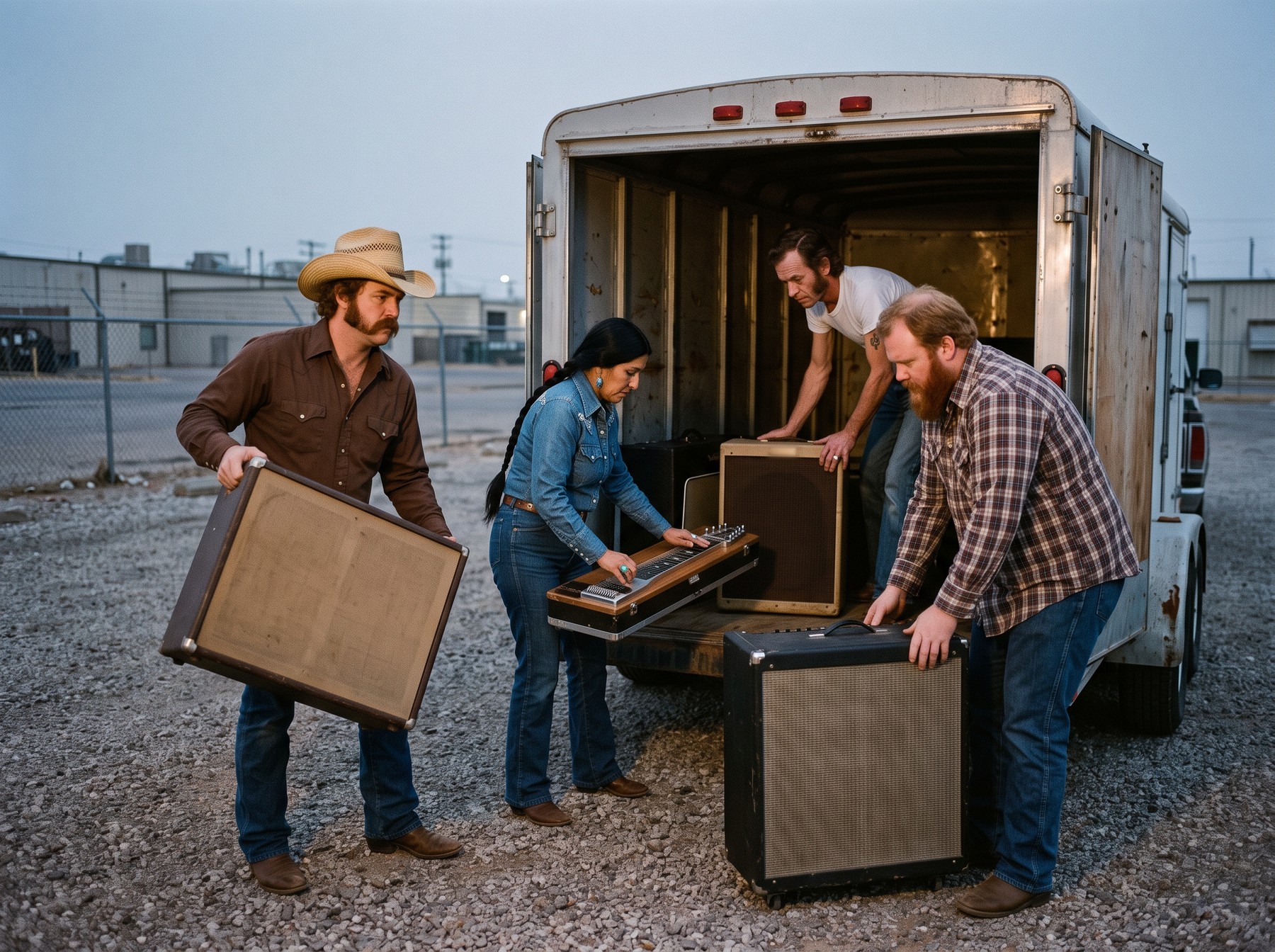
What they find, at the edge of the lot, is a forty-eight-foot flatbed trailer with the amplifiers strapped down and a pedal steel guitar bolted to a sheet of plywood so it cannot walk, and four musicians from Amarillo. They call themselves The Shoulder Lane. They have just put out their first record, No Radio Signal, on Hazard Zone Records. They would rather play a parking lot than a club, and most weeks they can arrange it.
The voice on the radio belongs to Wade Tolliver, who sings, plays acoustic guitar and goes by Static on the air. He drove long-haul out of Amarillo for eleven years, from 1967 until last year, and sang at dances on his weekends home. He holds a microphone the way he held the handset: close, low, thumb ready to let go of the key.
Wade writes the words. Dee decides how long the road is between them.
The band will tell you, in any conversation, that its best musician is Dolores Ochoa, and the band is right. Dee Ochoa has played pedal steel in dance halls in Hereford and Lubbock since she was sixteen. She arranges the songs, sets the tempos and counts in every number without looking up from the neck. "Wade writes the words," said Buck Riordan, who plays bass. "Dee decides how long the road is between them." Lonnie Fife plays drums. Before the trailer, his van carried everything.
They came together in June of last year on a seventeen-hour drive from Alpine to Amarillo with no radio station the four of them could agree on. By the time they reached Amarillo, they had stopped trying to find one.
We saw them on a Friday in August in the east lot of a truck stop on the edge of Amarillo. The trailer was parked broadside to the rigs. Forty-odd trucks were nosed in facing it, running lights on, drivers in their cabs with the windows down. A few had brought lawn chairs. Two couples danced on the asphalt during "Dee's Waltz," and a man in a feed-store cap stood beside his tractor for the whole of "Tulia, Texas" with his hat over his heart, which nobody explained to us and which we did not ask about.
Nobody claps. That is the custom. At the end of each song the drivers flash their marker lights, and at the end of the night they hold them on, and the band counts the rigs that answer and writes the number down. Riordan keeps the book. He showed it to us. It goes back to the first night.
The last song was "Static on the Line." Then Tolliver keyed the microphone and said, "This is Static, eastbound and westbound, we're gone. Keep the shiny side up," and unplugged the guitar. The lot lit up amber from one end to the other. Riordan counted thirty-eight and wrote it down. Then the rigs began to pull out, one at a time, east and west, and the band began to strap down the amplifiers.